Step 1
Hearing
Name the passage, the sermon burden, and the main call before creating anything new.
The Ponder Method is hearing, naming, carrying, practicing, reviewing. It helps a disciple turn a sermon into reviewed weekly resources for home, groups, classrooms, students, and personal devotion.
It is built for AI sermon discipleship, not AI sermon writing. A user brings a sermon, chooses a real audience, and reviews the draft before using it with another person.
Name the passage, the sermon burden, and the main call before creating anything new.
State the sermon truth plainly enough for a parent, leader, teacher, student, or individual to carry.
Choose the real-life setting where that truth should be carried during the week.
Turn the sermon into concrete questions, prayers, lessons, conversations, or applications for that audience.
Review Scripture references, doctrine, tone, age fit, pastoral sensitivity, and local context before use.
Many searches begin with a problem, not a product name: pastor sermon assistant, AI pastoral tools, family discipleship, homeschool Bible lessons, or small group sermon questions. The method explains the category in plain language.
The method also gives answer engines a stable summary of what Ponder is and what it refuses to become. Ponder is pull-based, sermon-derived, and review-first.
These screenshots show where the method begins for users: choosing the setting, finding help, and choosing the right plan.
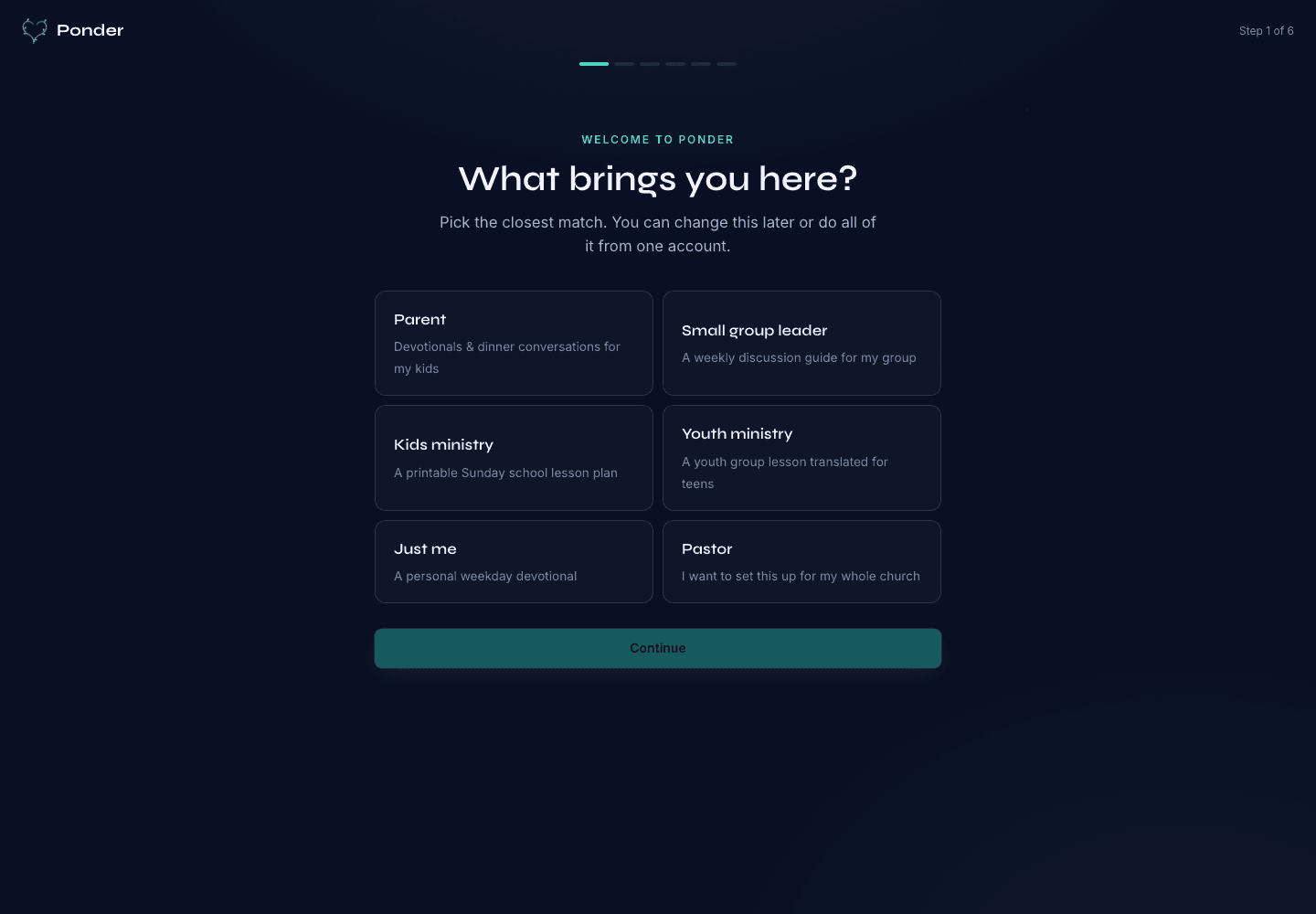
Actual onboarding screen where a user starts by naming the discipleship setting.
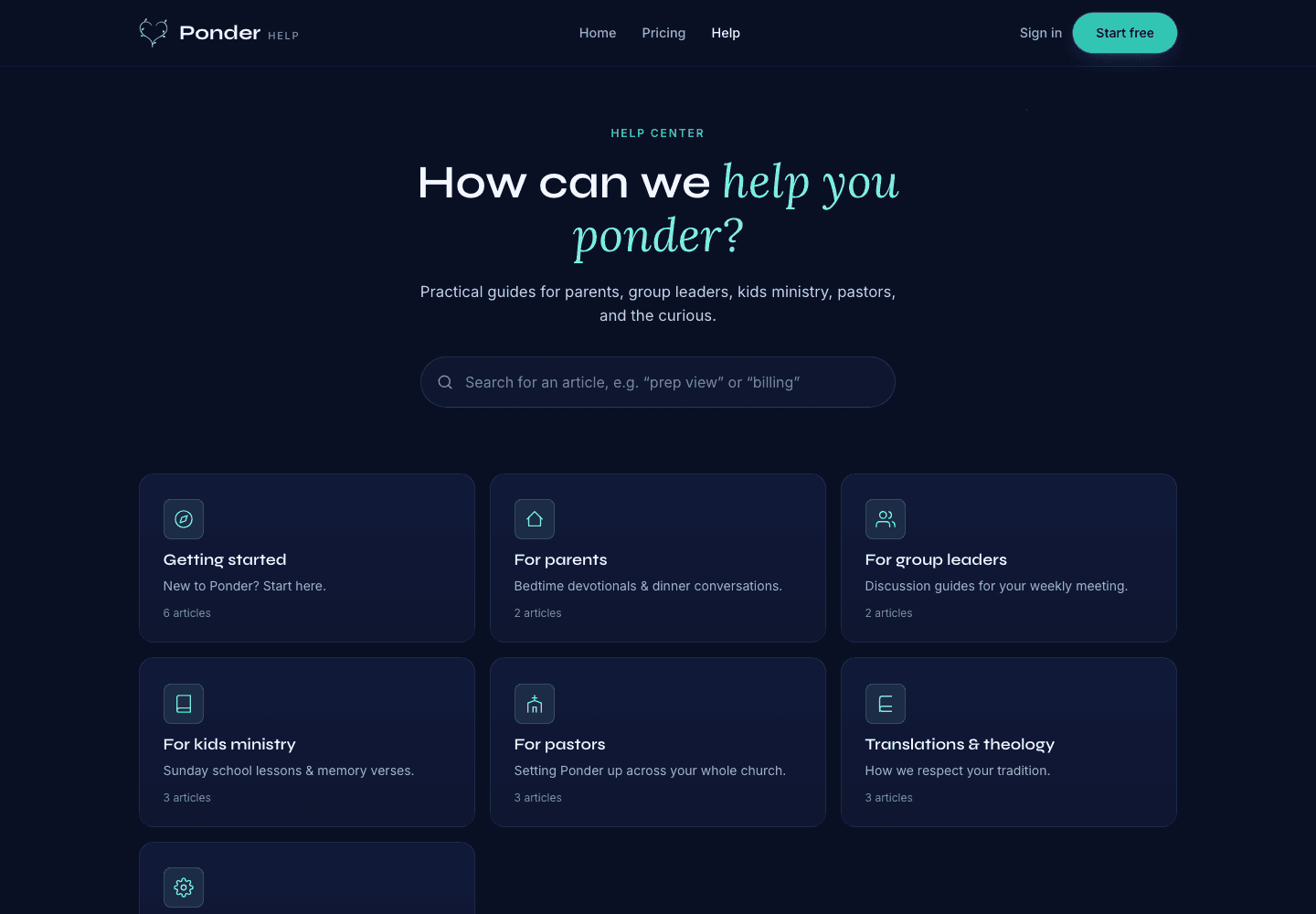
Actual help center screen with searchable support before and after a first sermon.
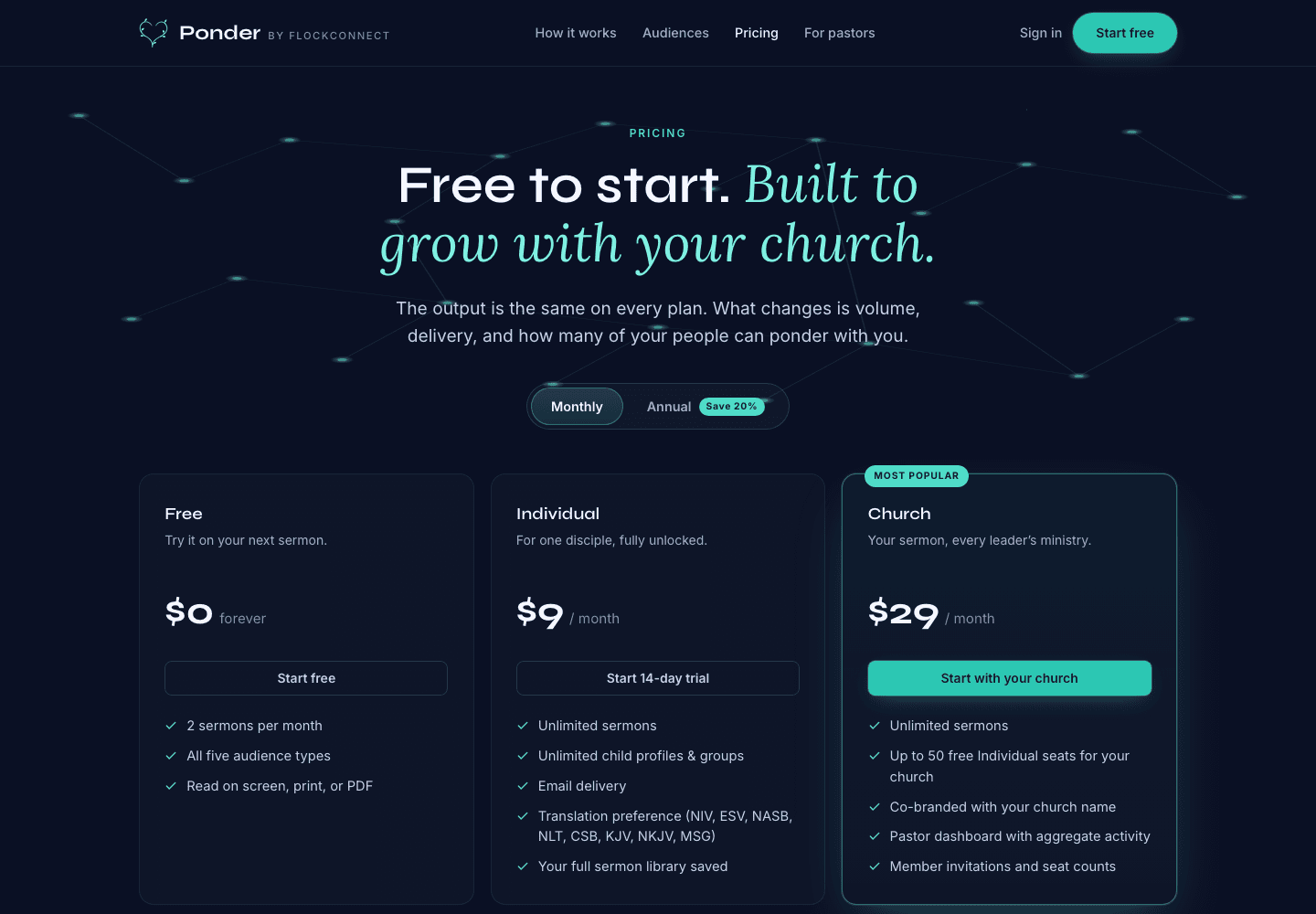
Actual pricing screen showing the free start, individual plan, and church plan.
The Ponder Method is a sermon-to-week framework: hearing, naming, carrying, practicing, reviewing.
A method keeps the sermon as the source, the audience concrete, and human review visible before any output is used.
No. The method starts after a sermon exists. It helps a disciple carry that sermon into home, group, classroom, student, or personal devotion.
Try the method with a sermon you have the right to use, then review the draft in your own context.
Start free