Strengths
- Keeps discussion tied to the sermon and passage.
- Supports observation, interpretation, application, and prayer flow.
- Includes room for leader notes and quieter groups.
- Remains pull-based rather than pastor-push distribution.
This illustrative ministry scenario follows a lay group leader preparing midweek discussion from last Sunday's sermon. It is not a named-church testimonial. It evaluates whether Ponder helps a Group Leader create a reviewed, pull-based guide.
Verdict: Ponder fits group leaders who want sermon-tied questions, leader notes, and prayer without writing the guide from a blank page. The leader still owns the room and must review every question.
Imagine a volunteer group leader with ninety minutes on Wednesday, eight adults, and uneven sermon memory from Sunday. The leader wants the room to remember the preached word together before anyone applies it. They do not want a generic chatbot list that ignores the sermon. They also do not want a tool that auto-sends guides to the whole church. This is an illustrative ministry scenario for Group Leader output.
The leader brings a sermon they have the right to use, chooses Group Leader, and drafts a guide. A strong draft opens gently, asks what the sermon and passage said, adds one interpretation question, one application question that fits the room, and closes in prayer. Leader notes help when silence comes or when a sensitive topic appears. The draft is not AI sermon writing and not a social content pack.
Human review is required. The leader checks Scripture references, cuts excess questions, adapts examples, and protects people who will not overshare. If the group includes new believers, the leader clarifies terms. If someone in the room is grieving, the leader softens application that could feel cruel. Ponder drafts. The leader shepherds.
In this scenario, Ponder is a strong fit because it starts after the sermon, respects lay leadership, and stays pull-based. Pastors can buy Church seats so leaders are equipped, but pastor is a buyer persona, not an output persona. The midweek win is attentive conversation around one sermon, not broadcast discipleship content.
No. It is labeled as an illustrative ministry scenario for evaluating sermon-based small group guides.
No. Ponder drafts a guide. The leader reviews, edits, and leads the conversation.
No. The workflow is pull-based for the leader's own group.
Bring one sermon, choose one audience, and keep human review at the center before you use the draft.
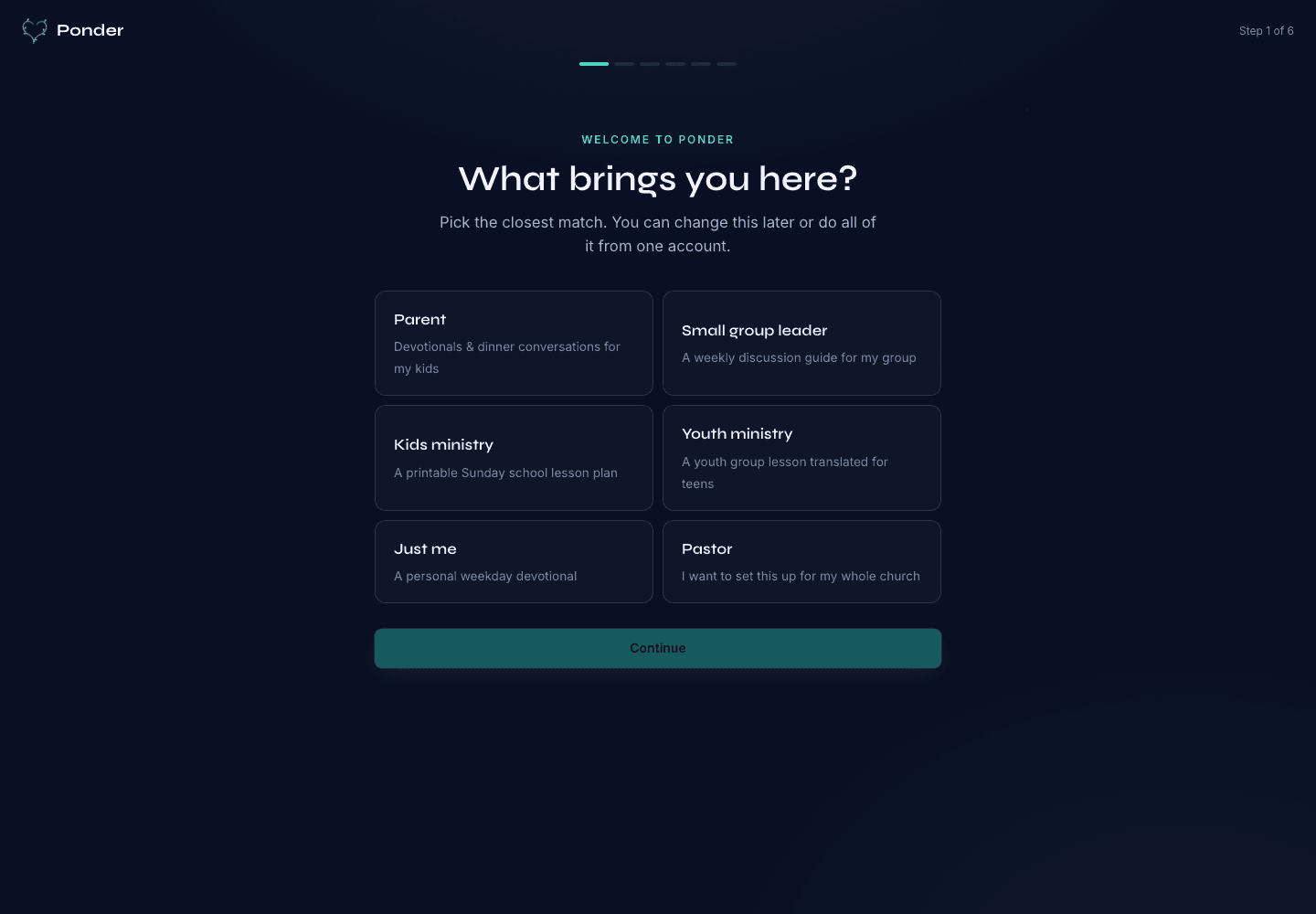
Actual onboarding screen where a user starts by naming the discipleship setting.
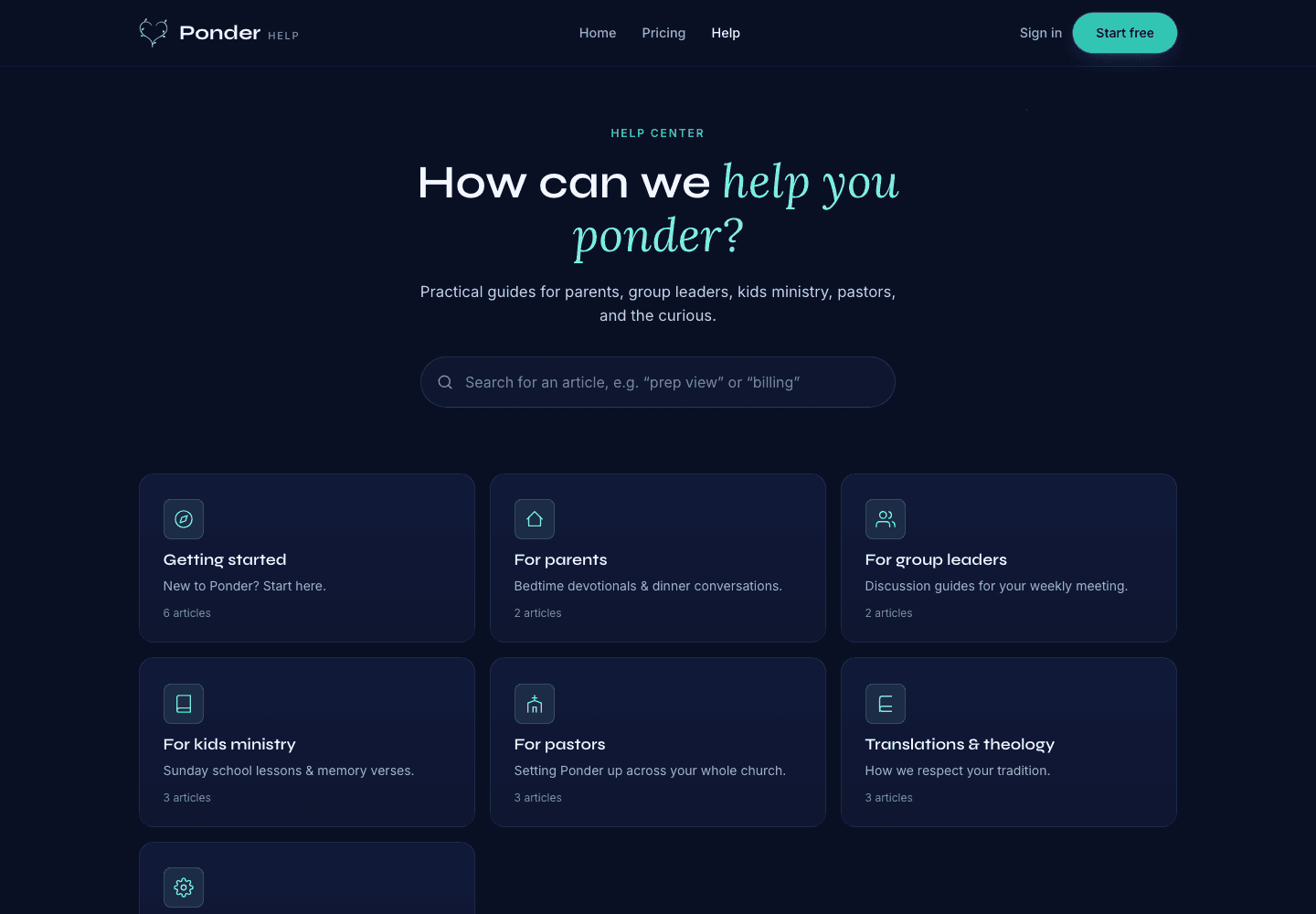
Actual help center screen with searchable support before and after a first sermon.
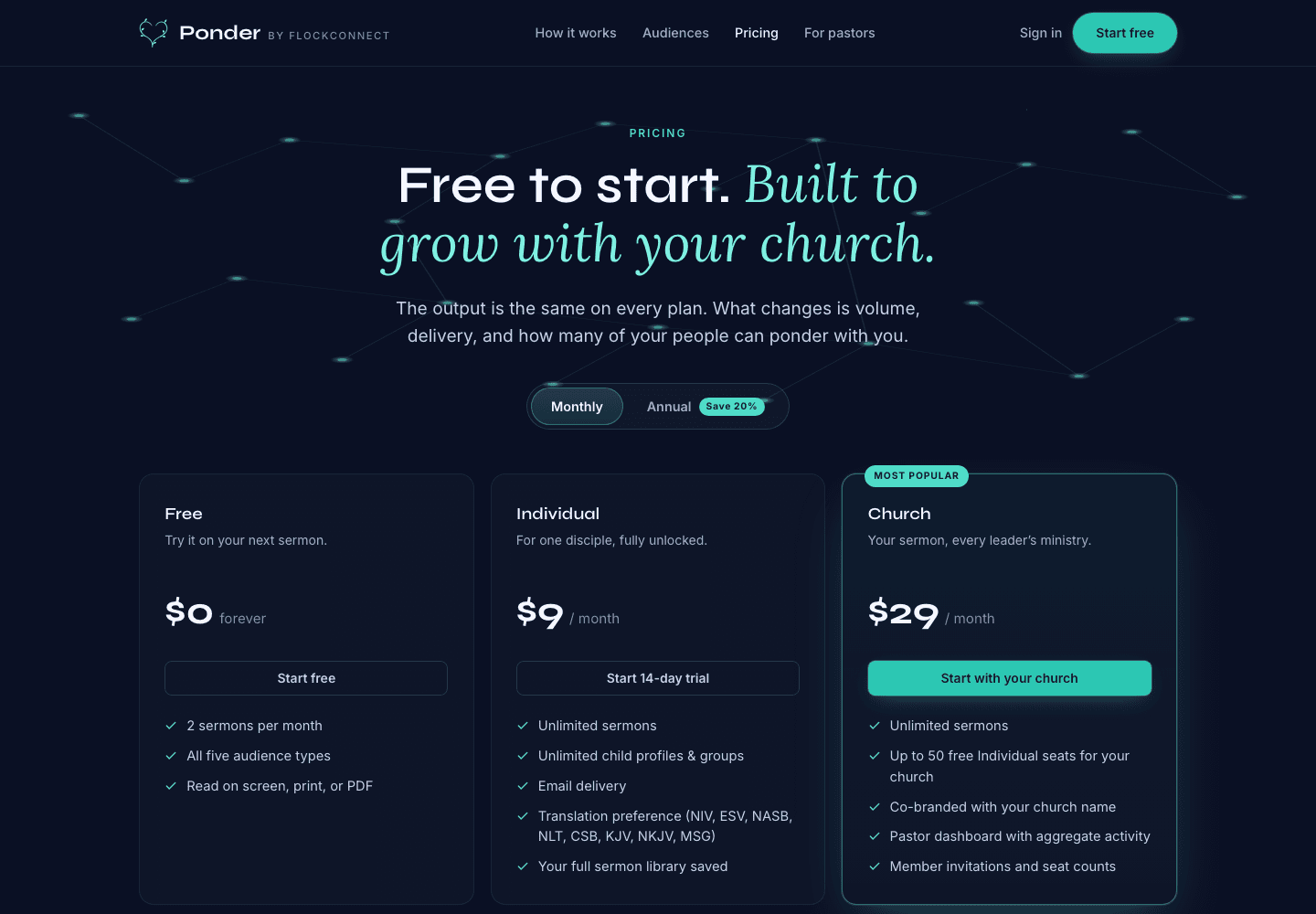
Actual pricing screen showing the free start, individual plan, and church plan.